Top Social Media Trends in Construction Marketing to Watch
Staying ahead in construction marketing involves leveraging emerging social media trends. Through high-quality visuals, like drone footage and 360-degree videos, visual storytelling greatly enhances audience engagement. Collaborating with industry influencers increases brand visibility and taps into niche markets. Live streaming real-time project updates fosters transparency and client trust. User-generated content and testimonials further boost credibility and engagement, particularly among Millennials and Gen Z. Additionally, targeted social media ads offer a higher conversion rate. Embracing these trends can significantly elevate your marketing strategy. Learn how these can redefine your construction marketing approach.
Visual Storytelling
In construction marketing, visual storytelling through high-quality images, videos, and graphics has emerged as a pivotal strategy. This approach enhances audience engagement and significantly boosts brand recognition on social media platforms. Construction businesses can effectively showcase projects, processes, and achievements by leveraging engaging content on platforms like Instagram, Pinterest, and YouTube. High-quality visuals like infographics, before-and-after photos, drone footage, and 360-degree videos allow companies to convey complex construction concepts compellingly. This attracts potential clients and demonstrates expertise within the construction industry. As social media platforms evolve, the emphasis on innovative visual storytelling techniques remains essential for maintaining a competitive edge and driving measurable engagement metrics.
Influencer Collaborations
Collaborating with industry influencers has become a strategic approach for construction companies. This approach aims to enhance brand visibility and tap into niche markets. Influencer collaborations in the construction industry can provide unparalleled access to targeted audiences, showcasing expertise in specialized areas. By generating authentic content through these partnerships, companies can build credibility and resonate more effectively with potential clients. Data demonstrates that such collaborations lead to higher engagement rates and an increased social media following. Moreover, strategic influencer partnerships increase brand recognition and potential client referrals. As the construction sector evolves, embracing influencer collaborations is proving to be an innovative and effective method for achieving sustainable growth and market penetration.
Live Streaming
Live streaming has become a pivotal tool in construction marketing. It offers real-time project updates and interactive engagement opportunities for industry professionals and clients. Using social media platforms, construction companies can showcase progress, equipment demonstrations, and on-site activities, fostering transparency and building stakeholder trust. The immediacy of live streaming enables audiences to experience the construction process first-hand, enhancing engagement and providing valuable behind-the-scenes insights.
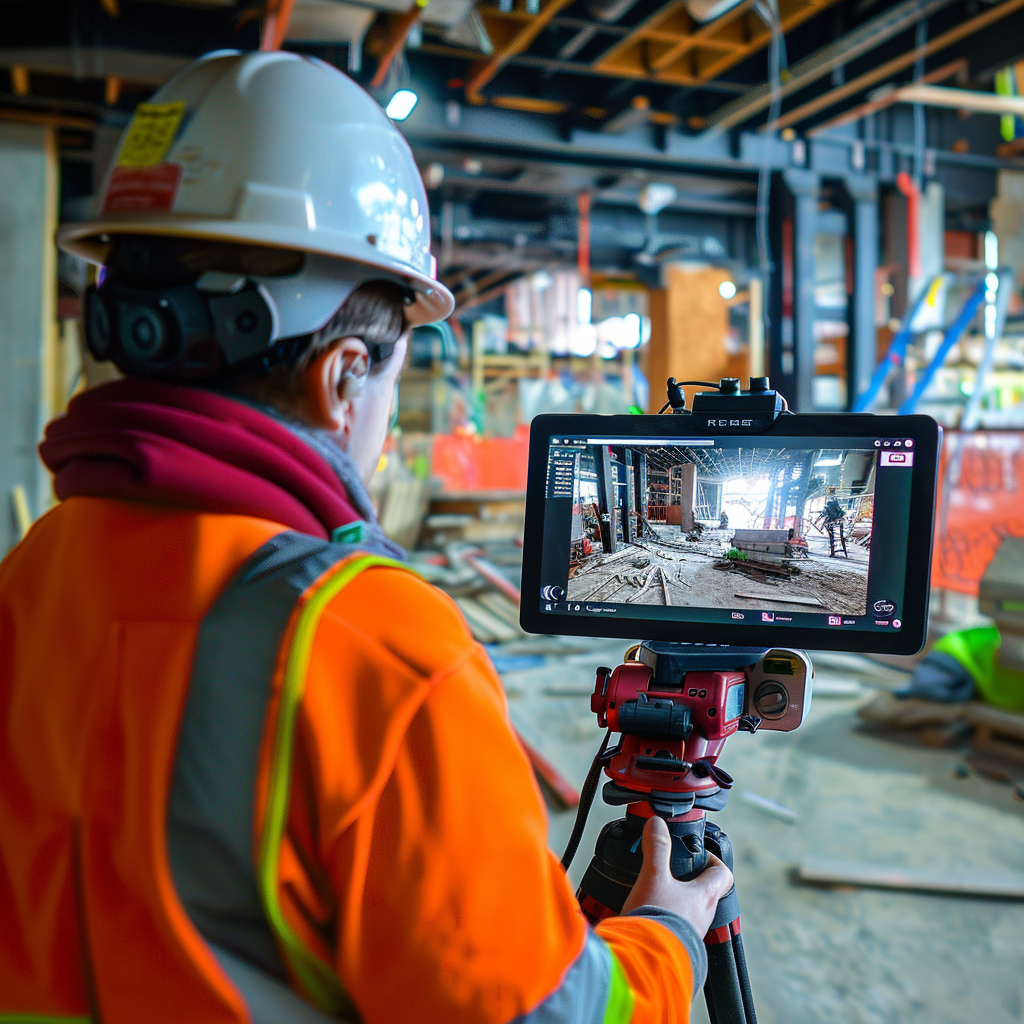
Virtual events, webinars, and Q&A sessions hosted via live streaming further amplify audience connectivity. With the proliferation of mobile devices, platforms like Instagram and Facebook have become instrumental in reaching a broader audience, making live streaming an essential strategy for forward-thinking construction marketers.
User-Generated Content
User-generated content in construction marketing greatly enhances engagement and trust, evidenced by its 28% higher interaction rates than standard company posts. This surge in engagement can largely be attributed to the authenticity of user-generated content, showcasing real-life experiences and testimonials that significantly boost credibility. With 85% of consumers finding user-generated content more influential than brand content, construction companies increasingly leverage this strategy to foster deeper connections. Particularly among millennials and Gen Z, who prioritize authenticity, user-generated content is a powerful tool. Encouraging clients to share their experiences increases engagement and extends the time spent on company websites by up to 90%, making it a pivotal trend in construction marketing.
Social Media Ads
The growing investment in social media ads, evidenced by a 14% increase in ad spend within the construction industry, underscores the critical role of digital advertising in reaching targeted audiences and driving higher engagement rates. Video ads, with a 25% higher engagement rate than static images, are particularly effective in construction marketing. Targeted advertising enhances conversion rates by 60%, enabling construction firms to connect more precisely with potential clients. With its click-through rate 2.2 times higher than other platforms, Instagram emerges as a pivotal channel for these campaigns. As social media ad spending is projected to surpass $50 billion by 2024, innovative construction companies prioritize these digital strategies to stay competitive and maximize their marketing ROI.
Augmented Reality
Augmented reality (AR) revolutionizes construction marketing by enabling immersive visualization of projects, enhancing client understanding and engagement with intricate designs and layouts. AR technology allows stakeholders to experience projects before they are built, facilitating real-time modifications and adjustments. This improves client communication and streamlines project planning and decision-making processes. The adoption of AR tools is on the rise, driven by their ability to transform traditional project visualization methods. By integrating AR into their marketing strategies, construction companies can offer clients a more interactive and all-encompassing view of proposed developments, ultimately leading to higher satisfaction and better project outcomes. This trend sets new benchmarks in how projects are presented and experienced in the industry.
Data Analytics
Harnessing the power of data analytics is essential for construction companies aiming to optimize their social media marketing efforts and achieve measurable results. Firms can gain profound insights into audience behavior and engagement rates by meticulously tracking social media performance metrics. This data reveals content effectiveness, helping companies refine their social media strategies for maximum impact. Construction businesses can access detailed information on user interactions and demographics using advanced analytics tools such as Facebook Insights and Google Analytics. These insights enable the creation of more targeted and successful social media campaigns. Ultimately, data analytics empowers construction companies to make informed decisions, driving innovation and elevating their online presence in a competitive market.

Niche Platforms
Building on the insights gained from data analytics, construction companies can further refine their strategies by leveraging niche social media platforms like Houzz and Architizer to reach highly engaged and targeted audiences. These niche platforms offer unique advantages for the construction industry:
- Targeted Marketing Efforts: Focused marketing to professionals and enthusiasts interested in construction-related content.
- Higher Engagement: Users on these platforms are highly engaged and actively seek out specific information.
- Quality Leads: More focused marketing efforts result in higher quality leads.
- Showcase Expertise: An ideal venue to showcase projects and expertise, enhancing brand credibility.
Employee Advocacy
Leveraging employee advocacy in construction marketing can notably amplify brand visibility and credibility by utilizing employees’ personal networks and authentic voices. Studies indicate that employee-generated content garners 8x more engagement than brand-shared content. Construction businesses can boost their reach and engagement by encouraging staff to share project updates and company milestones on social media. This strategy enhances social media presence, drives a 5x increase in web traffic, and generates 25% more leads. In an industry where trust and reputation are paramount, employee advocacy is a potent tool to reinforce brand visibility and foster deeper connections with existing and potential clients. So if you’re employees become your advocates make sure to show them your appreciation, be it by words, additional perks, or by increasing the number they see in their real paystub.
Conclusion
Integrating social media trends in construction marketing, such as visual storytelling, influencer collaborations, and augmented reality, can significantly enhance a firm’s online presence and client engagement. For instance, a hypothetical construction company that utilizes Instagram to showcase time-lapse videos of project completions may attract considerable client interest and industry recognition. Staying attuned to these evolving strategies is imperative for construction firms seeking to leverage digital platforms for sustained growth and competitive advantage.